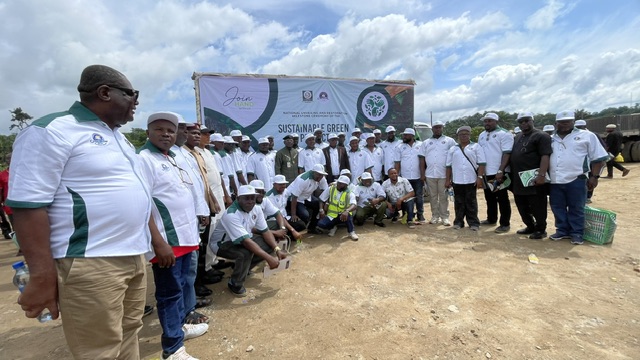

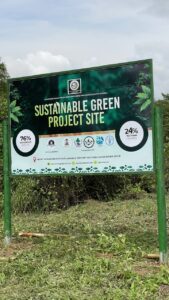
The Processed Wood Producers and Marketers Association of Nigeria (PROWPMAN) has officially flagged off a 2,000-hectare tree-planting initiative in Cross River State as part of efforts to restore degraded forests, promote sustainable timber production, protect the environment and create economic opportunities for host communities.
The initiative forms part of a broader forest restoration programme for which the Cross River State Government, through the Cross River State Forestry Commission, reportedly allocated 5,000 hectares of degraded land to PROWPMAN under a Memorandum of Understanding (MoU).
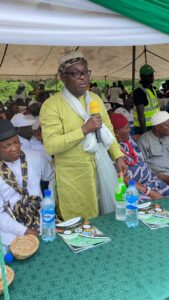
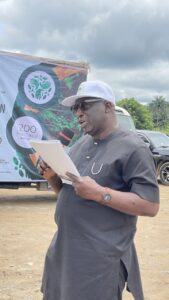
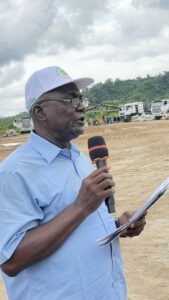
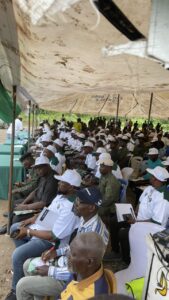
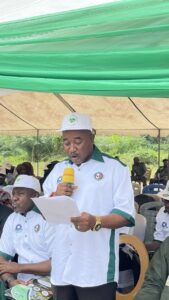
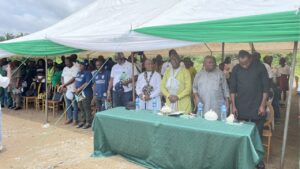
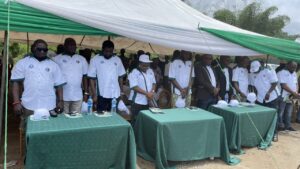
The flag-off ceremony, held in the Mfamosing area of Akamkpa Local Government Area, brought together forestry professionals, government representatives, timber dealers, community leaders and other stakeholders committed to sustainable forest management.
The programme builds on tree-planting activities that commenced in 2025 in communities including Mfamosing, Camp 2 and Abinti, with an emphasis on replacing harvested trees, restoring degraded forest areas and ensuring that future generations benefit from the state’s forest resources.
PROWPMAN President Calls for Shift from Forest Exploitation to Restoration
In his welcome address, the National President of PROWPMAN, Chief Ademola C. Oyaleke, described the initiative as a statement of the Nigerian wood industry’s commitment to moving from forest exploitation to restoration and sustainable resource management.
He recalled that the association began the initiative on June 25, 2025, noting that the project had progressed from an association-led undertaking to a practical effort towards climate action and forest conservation.
According to Oyaleke, the association’s reported progress included the restoration of 200 hectares of land and the planting of 80,000 economic trees across Mfamosing, Camp 2 and Abinti.
He explained that the initiative was driven by three major objectives: fulfilling the industry’s environmental responsibility, safeguarding the future livelihoods of people who depend on timber, and contributing to Nigeria’s climate commitments and the United Nations Sustainable Development Goals, particularly SDG 13 on climate action and SDG 15 on life on land.
Oyaleke expressed appreciation to the Cross River State Government for making land available for the initiative through the Forestry Commission, describing the support as an opportunity for the association to contribute to the long-term protection of the state’s forest resources.
He also acknowledged the Forestry Association of Nigeria (FAN) for its technical support and the Food and Agriculture Organization of the United Nations (FAO) for donating 40,000 seedlings and encouraging the project.
The PROWPMAN president further commended the host communities for providing land, labour and security, stressing that community participation remained essential to the survival and protection of the plantations.
Six Economic Tree Species Selected for Planting
Oyaleke disclosed that six economic tree species had been selected for the restoration programme. They include:
- African mahogany (Khaya species), locally known as Oganwo.
- Teak (Tectona grandis).
- Bush mango (Irvingia gabonensis), commonly called Ogbono.
- Obeche (Triplochiton scleroxylon).
- Albizia lebbeck, locally referred to as Igbagbo.
- Opepe (Nauclea diderrichii).
He said the selected species were expected to contribute to forest restoration, carbon sequestration, employment generation and the provision of non-timber forest products that could support the livelihoods of women and other community members.
The president also reported that the project’s tree survival rate had increased from 65 per cent in 2025 to 93 per cent in 2026, attributing the improvement to active community participation.
However, he identified funding constraints, bush burning and the high cost of transporting materials to remote planting locations as challenges facing the programme.
He disclosed that PROWPMAN was targeting two million seedlings in 2027 and appealed to the Cross River State Government to institutionalise the restoration model across the state’s three senatorial districts.
He also called on the Federal Ministry of Environment to support the association in accessing the National Afforestation Fund and international climate finance, while urging PROWPMAN members nationwide to replicate the initiative in their respective states.
Oyaleke cited previous planting initiatives undertaken in Ekiti, Ogun, Adamawa, Taraba, Kogi and Oyo states, calling for continued maintenance and expansion of existing plantations.
Forestry Expert Advocates Private-Sector Participation
Delivering the keynote address, Professor Ogunsanwo Olukayode spoke on the sustainability of forest development in Nigeria, emphasising the need for private-sector participation, traceability in the timber value chain and the development of a viable economic model for reforestation.
He urged Nigerians to embrace the principle of planting trees whenever trees are harvested, noting that forest conservation required cooperation among government institutions, industry operators, communities and individuals.
The professor commended PROWPMAN for bringing industry stakeholders together to invest in tree planting and encouraged the public to support the association’s efforts.
He concluded with the message: “If you give to nature, nature will give back to you.”
FAN Cross River Commends PROWPMAN’s Forest Restoration Initiative
The Chairman of the Forestry Association of Nigeria, Cross River State Chapter (FANCROSS), Dr. Otu Ibor, described the initiative as an important step towards protecting, conserving and sustainably managing the state’s forest resources.
He noted that responsible forest management was important not only for environmental protection but also for promoting sustainable livelihoods among rural residents and safeguarding public health.
Ibor said FANCROSS was pleased to be part of the project and commended PROWPMAN for taking the initiative, alongside the Cross River State Forestry Commission for supporting its implementation.
Providing details of the planting activities, he reported that approximately 39,000 assorted seedlings had been planted across 101 hectares between July 27, 2025, and July 10, 2026.
The species listed in his remarks included mahogany (Khaya senegalensis), bush mango (Irvingia gabonensis), opepe (Nauclea diderrichii), Albizia lebbeck and teak (Tectona grandis).
He said the project had provided employment opportunities for people from surrounding communities, adding that residents of Mfamosing, Camp 2 and Abinti had participated in the planting activities.
The FANCROSS chairman expressed hope that the host communities would take ownership of the plantations and protect them against activities that could undermine their survival.
He identified unsustainable farming practices, uncontrolled grazing, bush burning, encroachment, inadequate funding and poor maintenance as major challenges facing afforestation programmes.
To address these challenges, he called for sustained funding, routine maintenance and effective monitoring of planted areas.
Ibor pledged FANCROSS’s continued partnership with PROWPMAN and appealed to local, state and federal governments to support initiatives aimed at sustainably managing Nigeria’s forest resources.
He also thanked the Cross River State Forestry Commission for granting the necessary permission for the restoration activities and commended the national leadership of FAN for selecting Cross River State for the project.
Forestry Commission Chairman Highlights Government’s Restoration Agenda
The Chairman of the Cross River State Forestry Commission, Rt. Hon. George O’ben-Etchi, said the initiative reflected the commission’s responsibility to restore degraded forest areas and strengthen sustainable forest management.
He explained that the state’s previous restrictions on forest activities were introduced against the backdrop of concerns about uncontrolled harvesting and increasing forest degradation.
According to him, subsequent legislative action to reopen and regulate forest activities was intended to establish a more sustainable framework for managing the state’s forest resources.
O’ben-Etchi described PROWPMAN as an important partner in the effort to ensure that harvested trees were replaced through systematic replanting and that forest resources remained available for future generations.
He said the allocation of land for the project and the commencement of planting activities in 2025, followed by the official flag-off in 2026, represented progress towards a more structured approach to forest restoration.
The commission chairman also commended Governor Bassey Edet Otu for supporting afforestation and forest conservation efforts in Cross River State.
Community Leaders, Timber Dealers Back Tree Planting
Traditional leaders from the host communities welcomed the initiative, expressing appreciation for the economic and environmental benefits that the plantations could provide.
They urged those involved in the project to recognise the long-term value of economic trees and allow sufficient time for them to mature before harvesting.
The community leaders observed that some trees encountered in the forest had survived for hundreds of years, underscoring the importance of long-term planning in forest management.
Similarly, the Cross River State President of timber dealers, Hon. Felix Ojowa, commended PROWPMAN for promoting afforestation and pledged support for the initiative.
He stressed that replacing harvested trees was essential to reversing forest degradation and ensuring that future generations would not inherit depleted forest resources.
Ojowa also called for a responsible approach to timber production, noting that present-day forestry practices should protect the interests of children and generations yet unborn.
Governor Otu’s Representative Calls for Stronger Forest Protection
Representing Governor Bassey Edet Otu at the ceremony, the Chairman of the State House of Assembly Committee on Forestry and Environment, Hon. Ovat Agbor, commended the initiative and the Forestry Commission’s efforts to strengthen forest conservation.
Agbor said the state’s forest management framework was intended to address uncontrolled logging and establish more effective regulation of harvesting activities.
He described the PROWPMAN project as an opportunity to combine responsible timber harvesting with the planting of replacement trees, thereby supporting forest regeneration and sustainable economic development.
He commended the governor’s administration and the Forestry Commission, led by Rt. Hon. George O’ben-Etchi, for their efforts towards improving forest management.
Agbor also called for stronger enforcement measures against illegal logging and other activities that damage forests, emphasising the importance of protecting the environment for future generations.
He noted that Cross River State’s tropical rainforest remained an important environmental asset and urged the Forestry Commission to sustain efforts to protect and manage it through qualified personnel and effective policies.
GALLERY FOR POWPMAN TREE PLANTING IN CROSS RIVER STATE: 



Hope you find the Above publication useful, Calabargist will love to keep you updated via our newsletter by subscribing with your email.