
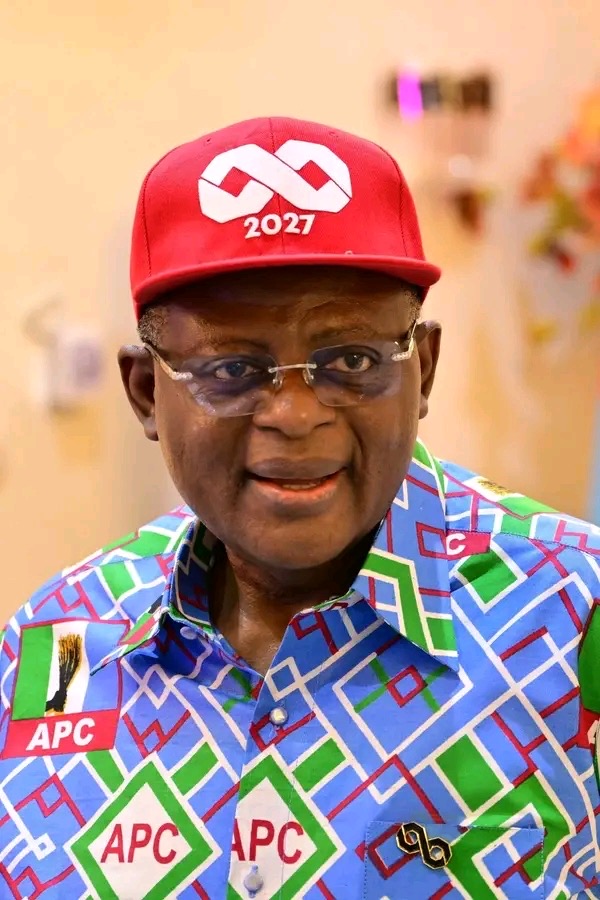

APC at the Crossroads: Why Recalibration Can No Longer Wait
By Adoma Mbeh
The road to 2027 has already begun, and for the All Progressives Congress (APC) in Cross River State, the warning signs are becoming impossible to ignore. With strong indications that the Peoples Democratic Party (PDP) may hand Sandy Onor its presidential ticket in Cross River State as a strategic move to strengthen his political bargaining power ahead of 2031, the implications for APC are profound and potentially far-reaching. Such a development would not merely energize the opposition for 2027; it would position Sandy Onor at the center of long-term political negotiations within the state, with telling consequences for the future balance of power.
The recent movement of Alex Egbona from Abi/Yakurr, alongside the quiet but significant strategic defections and realignments involving John Upan Odey and Kjay Jeddy Agba in Cross River North, signals a clear political trend. These shifts, combined with other emerging alignments across political blocs, suggest one thing unmistakably: the PDP is regrouping, rebuilding, and gradually reasserting itself at the political center of Cross River State. The opposition is no longer fragmented or dormant. It is reorganizing with intent.
That reality alone should compel the APC to abandon complacency and urgently recalibrate its internal strategy before avoidable mistakes create openings the opposition will gladly exploit.
At the center of the party’s strategic challenge lies the issue of zoning arguably the most sensitive and decisive factor in preserving unity, fairness, and electoral viability. Across Cross River State, the politics of inclusion and balance remain deeply influential. Any party that ignores this reality does so at its own peril.
Nowhere is this more urgent or politically consequential than in the Obubra/Etung Federal Constituency. The matter is not merely about political convenience; it is about justice, equity, historical balance, and political survival. The rotational understanding within the constituency is neither ambiguous nor accidental. Etung held the House of Representatives seat from 2003 to 2015, after which Obubra took over from 2015 and is expected to complete its turn by 2027. By every accepted principle of fairness and political reciprocity, the seat should naturally return to Etung.
Attempts by some voices in Obubra to justify retaining the seat on the argument that Etung “already did sixteen years” are not only intellectually weak but politically dishonest. That argument is lame, dry, and tempered by a cynical awareness of human imperfections—an opportunistic interpretation of history designed to suit immediate ambitions rather than uphold collective agreements.
If the sixteen-year argument is to be honestly interrogated, then critical historical questions must also be asked. What happened to the 1999 Federal Constituency ticket that was originally meant for Obubra, before John Okpa traded it for the Deputy Governorship position? Who made that political exchange, and at what cost to the delicate balance between both blocs? And if that history is now being invoked in political arithmetic, then fairness also raises another question: if the federal seat remains in Obubra beyond 2027, will Obubra concede an elective office of equal weight to Etung in the form of Deputy Governor?
These are legitimate questions that expose the contradictions behind the current arguments against zoning the seat back to Etung.
The truth is simple: APC cannot hope to retain strength in Obubra/Etung while simultaneously disregarding the legitimate expectations of Etung people. Zoning the seat to Etung is not a concession; it is a strategic necessity.
Equally critical is the question of leadership within the party. The governor, Bassey Otu, remains the leader of the party in the state, and the burden of strategic coordination ultimately rests on his shoulders.
The Central Senatorial District presents another delicate layer of political calculation, where emerging alignments and succession interests demand careful balancing rather than impulsive positioning.
In Abi/Yakurr, unfolding political movements and early succession calculations risk becoming a distraction from the broader task of consolidating party cohesion ahead of 2027.
The stakes are high, and the margin for error is increasingly thin.
Governor Bassey Otu must therefore act decisively.
The time to act is now.
Hope you find the Above publication useful, Calabargist will love to keep you updated via our newsletter by subscribing with your email.