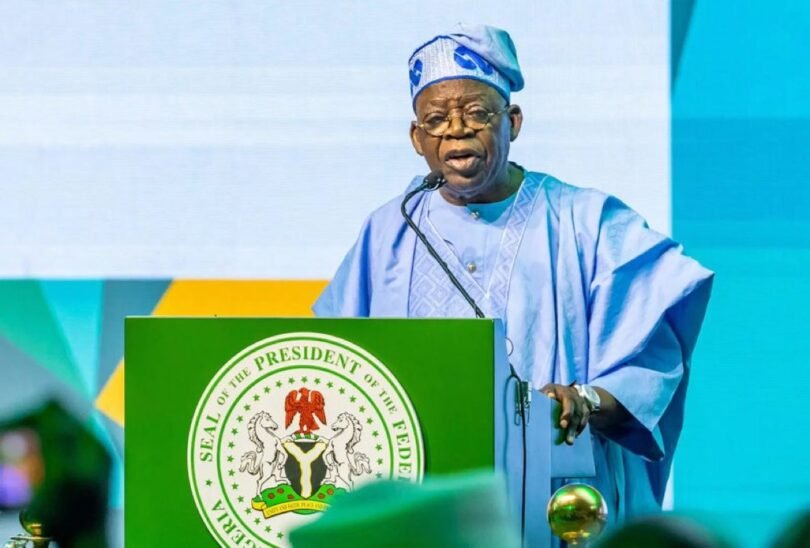

President Bola Tinubu has defended his administration’s borrowing strategy, saying Nigeria is shifting towards borrowing for infrastructure development and long-term economic growth rather than simply covering short-term fiscal pressures.
In an article titled “From Reforms to Delivery: Our Infrastructure Investment and Growth Strategy,” shared on Thursday, October 29, 2026, Tinubu said borrowed funds must be invested in projects that create jobs, improve productivity and deliver lasting benefits to Nigerians.
The President said the strategy was part of his administration’s ambition to grow Nigeria into a $1 trillion economy by 2030. He argued that the country needs modern infrastructure to support industrialisation, trade, agriculture and private-sector investment.
According to Tinubu, key projects include the Lagos-Calabar Coastal Highway, Sokoto-Badagry Superhighway, Trans-Sahara Superhighway, electricity transmission upgrades and the modernisation of major commercial ports in Lagos.
He said these investments could improve transportation, reduce the cost of moving goods, connect businesses to markets and create employment opportunities.
Tinubu also maintained that economic reforms introduced by his administration, including petrol subsidy removal, foreign exchange reforms and tax changes, had helped improve government revenue and strengthen Nigeria’s financial position.
However, the President acknowledged the importance of fiscal discipline, stressing that the success of the borrowing strategy would depend on the completion of projects and the value they deliver to the economy.
He said Nigeria’s progress should be measured by tangible results, including better infrastructure, more jobs and improved living standards, rather than the amount of financing secured.
The statement comes amid renewed public debate over Nigeria’s borrowing plans. On October 27, Tinubu sought National Assembly approval for a supplementary external borrowing plan covering 2026 and 2027, including about $20.52 billion and €1.05 billion in proposed loans. The funds are intended to support infrastructure and other development priorities, subject to the required approvals.
The administration’s approach is likely to face continued scrutiny over debt servicing, transparency and whether the proposed investments will produce sufficient economic benefits.
Tinubu maintained that responsible borrowing, effective project delivery and sustained investment would be critical to achieving the government’s $1 trillion economy target by 2030.
ALSO READ:Tinubu Moves to Free 300 Containers of Power Equipment Trapped at Nigerian Ports for 20 Years
Hope you find the Above publication useful, Calabargist will love to keep you updated via our newsletter by subscribing with your email.