
FOR IMMEDIATE RELEASE
Concerns Over Methodology, Conclusions of the Recent SBM Intelligence Quality-of-Life Report
The Cross River State Consultative Forum expresses serious reservations over the recently published quality-of-life report by SBM Intelligence which ranked Cross River State poorly across several governance and livability indicators.
While acknowledging the importance of independent policy research in strengthening democratic accountability and public discourse, it must be stated that the report suffers from significant methodological limitations, analytical overreach, and sweeping generalisations that substantially weaken the credibility of its conclusions regarding Cross River State.
The report, titled “Where Nigerian Families Actually Thrive,” relied on a Quality of Life Survey involving 442 respondents and a Power Survey involving only 191 respondents across multiple states and the Federal Capital Territory. These figures were insufficient to support definitive conclusions concerning millions of residents spread across highly diverse socioeconomic and geographic environments.
Drawing broad conclusions such as “state collapse,” “systemic governance failure,” and portraying relocation as “the only rational choice” for residents raises legitimate concerns about statistical representativeness, interpretative neutrality, and methodological balance.
We further observe that several sections of the publication appeared to blur the line between empirical analysis and editorial commentary, relying heavily on anecdotal narratives, subjective interpretations, media reports, and emotionally loaded language rather than verifiable longitudinal governance data.
While the report highlighted genuine developmental concerns that require sustained attention, it failed to sufficiently contextualise the prevailing national economic realities affecting virtually all states in Nigeria, including inflationary pressures, post-subsidy adjustments, rising energy costs, exchange rate instability, and nationwide infrastructure deficits.
The Forum maintains that quality-of-life outcomes cannot be isolated from broader national macroeconomic pressures, particularly within a federal system where many fiscal and structural constraints remain centrally influenced.
There are internal inconsistencies within the report itself. While Cross River was portrayed as experiencing near-total institutional decline, the report simultaneously acknowledged that 59.1 per cent of respondents from the state expressed optimism regarding future improvements in power supply — a figure reportedly higher than those recorded for Abuja and Anambra.
Similarly, although Rivers State performed strongly across healthcare, stability, and infrastructure metrics in the same report, it still recorded a relocation intention rate of 40.4 per cent, suggesting that migration intentions are influenced by broader psychological, economic, and social considerations beyond governance performance alone.
Beyond methodological concerns, CRSCF states that the report failed to sufficiently capture several ongoing interventions and reforms undertaken by the administration of Governor Bassey Edet Otu between 2023 and 2026.
We contend that the Gov Otu administration has pursued genuine and visible interventions in infrastructure, healthcare, education, tourism, agriculture, and public welfare under its “People First” policy framework.
There is ongoing road construction and rehabilitation projects across several parts of the state, including interventions on the Calabar–Akamkpa corridor, Okuku–Yala axis, rural roads in Yakurr, Biase, Ikom, and Odukpani, as well as drainage rehabilitation and urban renewal projects within Calabar.
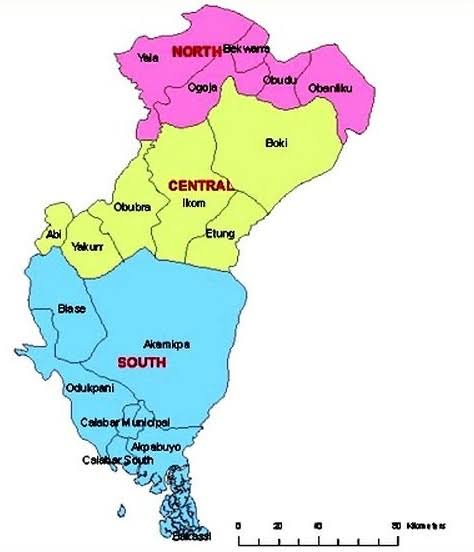
The Otu-led administration has undertaken extensive revitalisation of primary healthcare centres across the 18 local government areas, upgraded dialysis centres in Calabar and Ogoja, expanded health insurance coverage, strengthened immunisation campaigns, and introduced welfare-focused healthcare programmes targeted at vulnerable populations.
We will not fail to make reference to interventions in the education sector, including payment of WAEC fees for thousands of students for the past three years, rehabilitation of classrooms, distribution of school furniture, promotion of education personnel, and expansion of technical and vocational education opportunities.
On tourism and economic development, the administration had pursued the revitalisation of Marina Resort, repositioning of Carnival Calabar which has tripled attendance, restoration efforts at Obudu Ranch Resort, and broader initiatives aimed at restoring investor confidence in the state’s tourism sector.
Gov Otu’s agricultural empowerment extends to programmes, youth-focused initiatives, and rural development interventions implemented through partnerships with programmes such as LIFE-ND, APPEALS, and FADAMA.
There has been payment of backlog of pensions and gratuities which were left unattended for almost a decade, new employment of over 10,000 Cross Riverians into the state’s public and civil service and the list continues on end.
While Cross River State still faces developmental challenges requiring sustained reforms and institutional strengthening, reducing the state’s realities to sweeping narratives of “collapse” neither advances constructive policy engagement nor reflects the resilience, enterprise, and aspirations of its people.
The Forum adds that publicly available fiscal and developmental data from the National Bureau of Statistics and other national institutions indicate that many socioeconomic challenges identified in the SBM report are neither unique to Cross River nor sufficient to justify sensational characterisations capable of damaging investor confidence, discouraging tourism, and undermining public morale.
CRSCF therefore calls on research organisations, policy institutions, and development stakeholders to adopt more transparent methodologies, broader representative sampling frameworks, stronger peer-review mechanisms, and balanced analytical language when publishing reports with significant political and socioeconomic implications.
The Forum reiterates its commitment to evidence-based advocacy, constructive policy dialogue, and collaborative initiatives capable of advancing sustainable development, improving governance outcomes, and strengthening public institutions in Cross River State and Nigeria at large.
Signed:
Barr. Eyo Nsa Ekpo
Chairman
Cross River State Consultative Forum
Dr. Julius Ochim Okputu
Secretary
Cross River State Consultative Forum
Issued in Calabar
28th May, 2026
…For Equity. For History. For Progress.
Hope you find the Above publication useful, Calabargist will love to keep you updated via our newsletter by subscribing with your email.