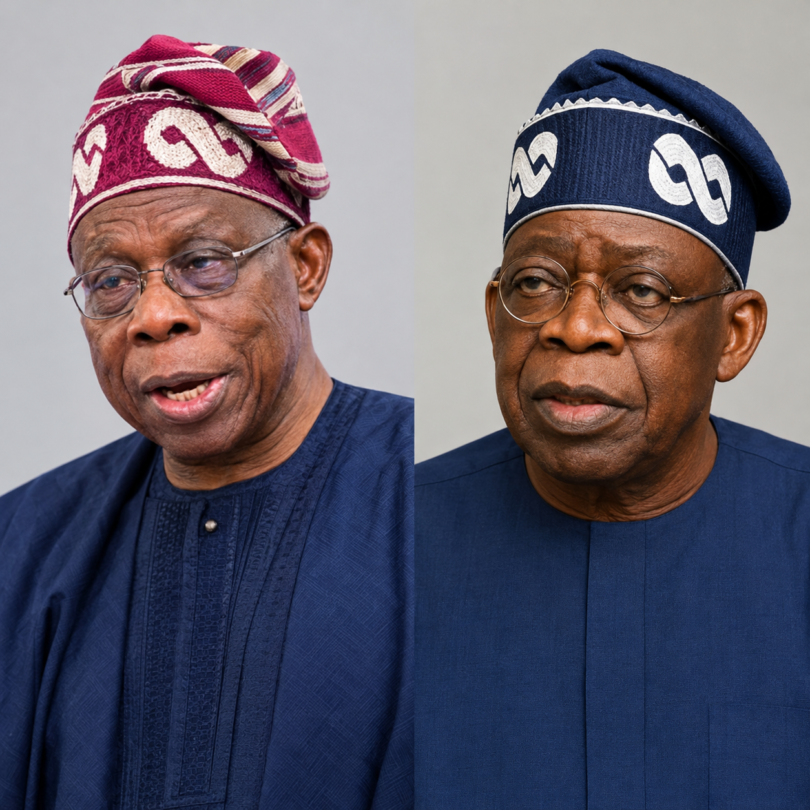

Former President Olusegun Obasanjo has criticised President Bola Tinubu’s economic reforms, arguing that the sharp depreciation of the naira has reduced Nigerians’ purchasing power and worsened the country’s poverty situation.
Obasanjo made the remarks on Wednesday, October 21, 2026, during the Financial Times Africa Summit 2026 in London, United Kingdom, where he questioned the impact of the administration’s economic policies on the welfare of ordinary citizens.
The former president specifically faulted the naira’s depreciation against the United States dollar, saying the currency’s decline had made life more difficult for Nigerians by increasing the cost of goods and services.
Speaking at the summit, Obasanjo said the naira had fallen from about ₦500 to the dollar to approximately ₦1,500, describing the change as a major setback for the country’s economic well-being.
“We do not live in isolation as a country. We interact with the rest of the world. And overnight, you devalue the currency by 300 per cent. The naira went from ₦500 to a dollar to ₦1,500 to a dollar,” he said.
He argued that the depreciation had significantly weakened Nigerians’ purchasing power and contributed to the country’s growing poverty challenges.
“What that meant was that every Nigerian is made poor by 300 per cent. That made Nigeria become the poverty capital of the world, which means Nigeria has the largest number of poor people in the world,” Obasanjo added.
“You cannot say to me that that is good for Nigeria. You cannot say to me that that is good for us in any sense.”
Obasanjo Questions Impact of Tinubu’s Economic Policies
Tinubu introduced major economic reforms shortly after assuming office in May 2023, beginning with the removal of the petrol subsidy during his inauguration.
The administration subsequently introduced foreign exchange reforms that allowed the naira to trade more freely, with the stated objectives of improving market efficiency, attracting foreign investment and addressing distortions in the currency market.
However, the policies have been accompanied by significant economic pressures, including higher petrol prices, increased transportation costs and rising prices of food and other essential goods.
The depreciation of the naira has also increased the cost of importing products and raw materials, placing additional pressure on businesses that depend on foreign supplies.
For many households, these developments have made it more difficult to afford basic necessities, particularly where incomes have not increased at the same pace as living costs.
Poverty Remains a Major Concern
Obasanjo’s comments have renewed debate over whether the benefits of the government’s economic reforms are reaching ordinary Nigerians.
While the administration has defended its policies as necessary to address longstanding economic challenges, critics have questioned the immediate impact on living standards and the ability of households to cope with rising expenses.
The International Monetary Fund has previously acknowledged that Nigeria’s reforms have helped improve aspects of economic stability, while warning that the gains have yet to benefit all Nigerians and that poverty and food insecurity remain serious concerns.
The central debate is whether the reforms will eventually deliver improved living standards or whether additional measures are needed to protect vulnerable households from the cost-of-living crisis.
Obasanjo’s remarks add to the growing discussion about the direction of Nigeria’s economy, the consequences of naira depreciation and the need for policies that translate economic changes into tangible improvements in citizens’ lives.
ALSO READ:2027: Why Kano Residents May Back Tinubu, Governor Yusuf Says
Hope you find the Above publication useful, Calabargist will love to keep you updated via our newsletter by subscribing with your email.