
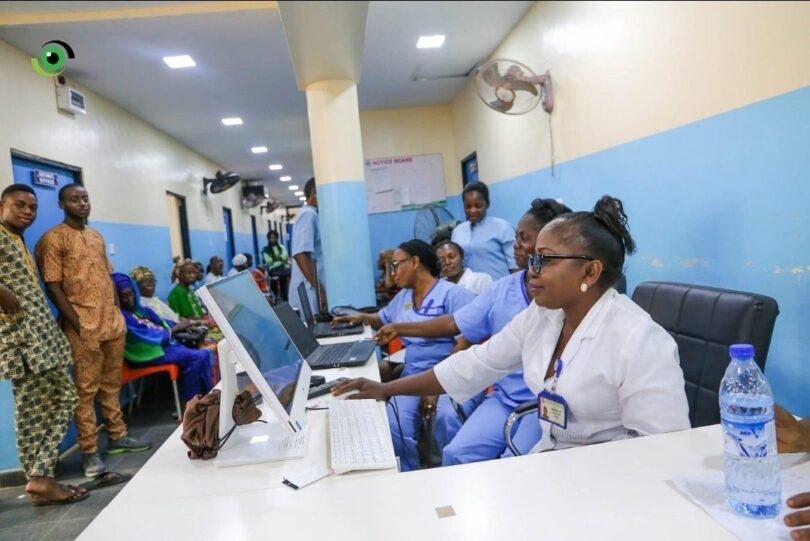

Nigeria is taking a major step towards transforming healthcare delivery with a new digital system that could allow patients to access their medical records across different hospitals without having to start from scratch.
The Federal Government is developing the National Digital Health Architecture (NDHA), a framework designed to connect Nigeria’s fragmented health-information systems under the principle of “One Patient, One Health Record.”
The framework, approved by the National Council on Health, has received the endorsement of all 36 states and the Federal Capital Territory, paving the way for a more connected digital healthcare system.
The initiative is expected to address a longstanding challenge in Nigeria’s healthcare sector, where patient records are often scattered across hospitals, clinics and laboratories, making it difficult for medical professionals to access previous treatment information.
Under the proposed system, a patient visiting a different hospital could have relevant medical information, including previous diagnoses, prescribed medications, laboratory results and referrals, made available to authorised healthcare providers.
This could reduce the need for repeated registrations, help doctors make faster decisions, minimise unnecessary medical tests and improve continuity of care, particularly during emergencies.
The Federal Ministry of Health has acknowledged that many electronic medical-record systems currently operating in Nigerian hospitals are fragmented, poorly standardised and unable to exchange information effectively.
The national architecture is designed to bridge these gaps by establishing common standards and secure channels through which public and private healthcare facilities can exchange information.
It also aims to give patients access to their own health data and enable them to share relevant records with others through consent-based arrangements.
However, the proposed transformation comes with significant responsibilities, particularly regarding data privacy and cybersecurity.
Medical records contain highly sensitive personal information, making strong security measures, clear access controls and proper consent procedures essential to protecting patients from unauthorised access or misuse of their information.
The Federal Government has also established the National Health Technology and Data Analytics Office to coordinate the country’s digital health agenda, harmonise existing systems and support the implementation of the approved architecture.
Although the initiative is still moving towards practical implementation, its potential impact on healthcare delivery is considerable.
If successfully deployed, the system could change how Nigerians interact with hospitals, making medical information more accessible to patients and healthcare professionals, regardless of where treatment was previously received.
Ultimately, the goal goes beyond replacing paper files with computers. It is about building a healthcare system where patients no longer have to depend on old hospital cards, envelopes or memory to explain their medical history every time they seek treatment.
ALSO READ:Kano Recruits 2,037 Health Workers to Tackle Staff Shortages
Hope you find the Above publication useful, Calabargist will love to keep you updated via our newsletter by subscribing with your email.