
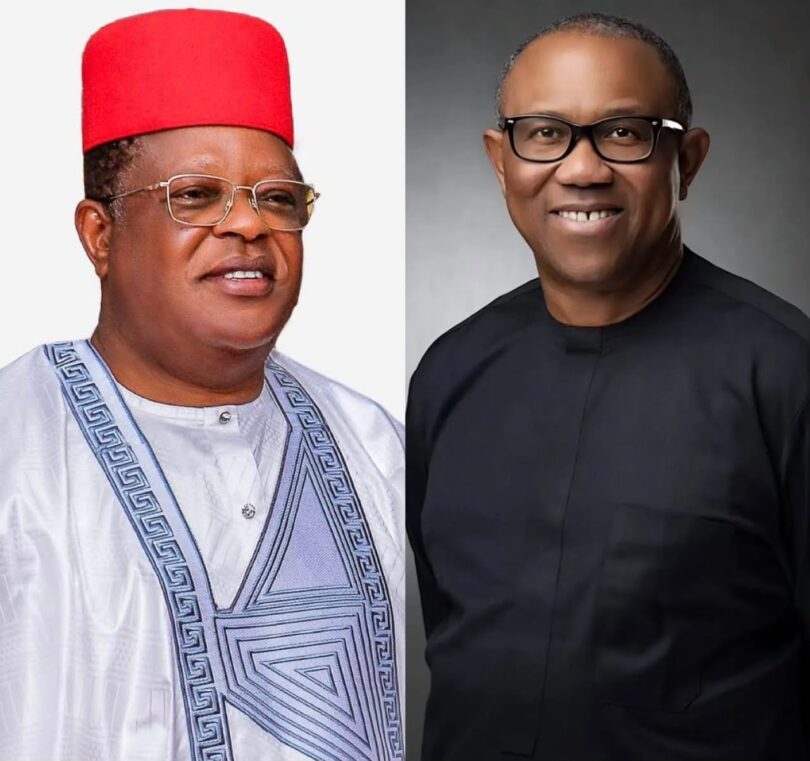

The decision by former Anambra State Governor and 2023 presidential candidate, Peter Obi, to decline an invitation for a public debate with the Minister of Works, David Umahi, has continued to generate reactions across political circles.
The invitation, extended by Senator Umahi, was aimed at fostering a public discourse on governance records, leadership performance, and national development, particularly drawing comparisons between their tenures as governors in the South-East region.
Also Read:Dave Umahi Message To All Igbo’s In Lagos and Other States In Nigeria
According to supporters of the Minister, the proposed debate would have provided Nigerians with an opportunity to examine the achievements, policies, and visions of both leaders, especially in areas relating to infrastructure, economic growth, and governance.
Mr. Obi reportedly declined the invitation on the grounds that Senator Umahi is not a presidential candidate, a position that has attracted mixed reactions from political commentators and stakeholders.
Proponents of the debate argue that public accountability should transcend electoral contests and that leaders should be willing to engage in discussions concerning their records in public office.
Supporters of Senator Umahi point to ongoing infrastructure projects under the administration of President Bola Ahmed Tinubu, including federal road construction, bridge projects, and other strategic initiatives being executed by the Ministry of Works.
They also highlight Senator Umahi’s tenure as Governor of Ebonyi State, citing developments in road infrastructure, healthcare, education, and urban renewal as evidence of his governance record.
Critics, however, maintain that political debates should be conducted within appropriate contexts and electoral frameworks, arguing that Mr. Obi’s decision not to participate does not necessarily imply an unwillingness to defend his record.
The debate invitation has nevertheless reignited conversations about political accountability, leadership performance, and the importance of issue-based engagement in Nigeria’s democratic space.
Observers note that Nigerians are increasingly demanding governance discussions centered on measurable achievements, policy implementation, and developmental outcomes rather than political rhetoric.
As reactions continue to trail the development, many believe that constructive public debates among political leaders could contribute to greater transparency and enable citizens to make informed judgments about the records and visions of those seeking to influence the nation’s future.
By: Emeka Julius Chijioke.
Hope you find the Above publication useful, Calabargist will love to keep you updated via our newsletter by subscribing with your email.