
Empowering farmers is not about sharing cash or dramatic displays; it is about providing the right tools/inputs that can improve productivity, income, and food security over time. Agriculture is a process, not a spectacle, and meaningful interventions are often quiet but impactful.
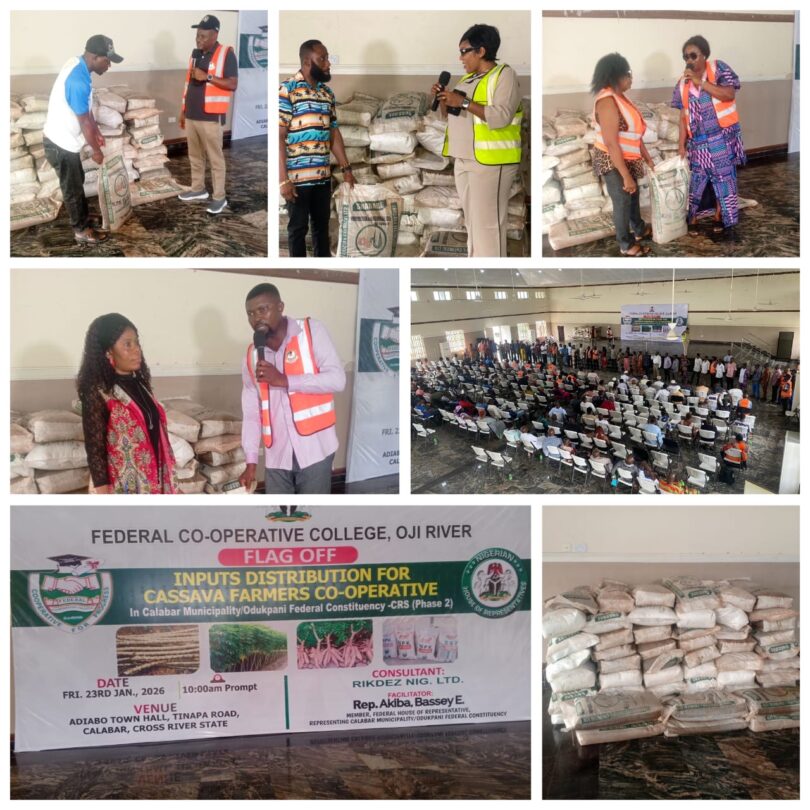
By empowering over 500 cassava farmers with improved cassava stems and NPK fertilizer, Rep. Bassey Akiba addressed the most critical needs of smallholder farmers including quality planting materials and soil nutrients.
Improved cassava stems are scientifically proven to produce higher yields while NPK fertilizer restores soil fertility and supports healthy crop growth. Without these inputs, farmers remain trapped in low productivity and poverty.
Belittling the initiative reflects a misunderstanding of how real agricultural empowerment works. Cassava is a major food and income crop for rural families. One planting season with improved inputs can increase harvests, reduce hunger, and generate surplus for sale. For many beneficiaries, this support means better school fees for their children, improved household income, and greater resilience against economic hardship. That is real empowerment not handouts.
It is also important to note that this programme was not targeted at a few individuals for publicity, but at hundreds of farmers’ cooperative. This approach ensures fairness, accountability, and sustainability. Empowering many farmers at once strengthens local food supply and boosts the rural economy far more than isolated handouts ever could. Rep. Bassey Akiba’s intervention reflects visionary leadership focused on long-term impact.
The true measure of leadership lies in commitment to improving lives and livelihoods of the people and Rep. Bassey Akiba is doing this through his Livelihood Support Programme; Health Support Programme; and Educational Support Programme. History will favour initiatives that alleviate and elevate lives and livelihoods. This cassava inputs distribution stands firmly in that category.